 In the previous blogs, we explored PVsyst software, simulation, and reports, and we also understood the importance of meteorological data in solar analysis. Both topics form the technical foundation of accurate solar planning. Now, we move forward to PV System Design and its different types.
PV System Design plays a critical role in determining how a solar power plant operates, performs, and delivers reliable energy. It defines system configuration, component selection, and overall energy management strategy. A well-planned PV System Design ensures maximum efficiency, safety, and long-term performance.
Energy storage and system configuration are key elements of modern PV System Design, especially in distributed solar systems. The ability of a solar system to continue functioning during grid outages, extreme weather conditions, or low production periods is known as energy resilience. Designing for resilience ensures consistent power supply and improved energy security.
Solar power generation naturally varies with weather conditions, daylight hours, and seasonal changes. Energy production increases on clear sunny days and decreases during cloudy or rainy periods. To manage these fluctuations effectively, excess energy is either stored in battery systems or exported to the utility grid.
Based on this energy management approach, PV systems are classified into different categories. Understanding these classifications is essential for selecting the right PV System Design that aligns with project requirements, load demand, and reliability goals.
Types Of PV System Design
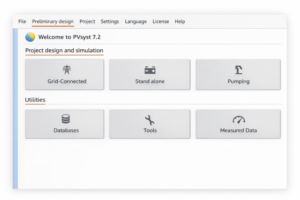
There are three types of PV System Designs. They are,
- Grid-Connected systems
- Standalone systems
- Pumping systems
One can find them under the preliminary design or project design and simulation section in PVsyst as shown in the below picture.
GRID-CONNECTED SYSTEMS:
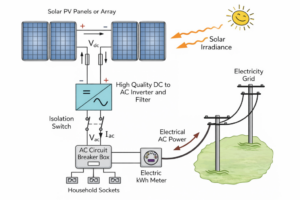
Grid-connected systems are PV systems in which PV panels or arrays connect to the utility grid through an inverter. Secondly, the inverter allows the panels to operate along with the electric grid. So, whenever there’s a surge in energy, it is fed directly into the electric grid. And if there’s a shortage in the generation, the power from the electric grid can be used. Henceforth, the electricity flows to and fro from the grid depending on the weather conditions and actual electrical demand at that time. To increase system resiliency, ensure that the solar system generates more energy than the required load demand. So, while designing a PV System Design: The sizing of the array has to be done accordingly. Consumption per day is an important factor in this regard.
The advantages of grid-connected systems include low cost of operation and maintenance, comparatively fewer electricity bills, and many more.
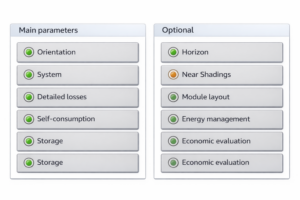
In PV System Design, the main parameters required for this system include orientation, system, and detailed losses.
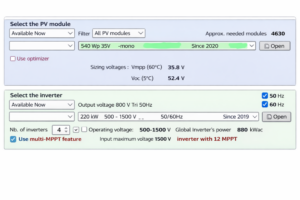
The system parameters include the details of system components i.e., PV module and inverter.
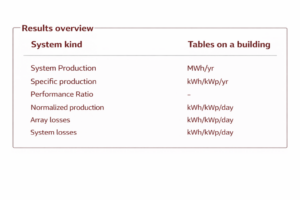
Results overview of grid-connected system includes the following parameters
STANDALONE SYSTEMS:
A standalone PV system is a solar PV system that uses the electricity it generates during the day to charge battery banks, allowing the stored electricity to be used at night. These systems work best in remote locations or in situations where a standalone setup is more cost-effective than a grid-connected system. Moreover, effective PV System Design ensures that the system operates reliably and efficiently in such conditions.
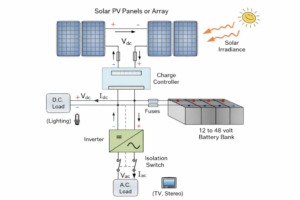 As discussed for grid-connected systems, system sizing plays an important role here as well. The solar array must produce enough energy to meet load requirements and charge the battery. Also, the battery must store sufficient energy to support AC and DC loads during situations such as power outages or natural disasters.
Designers must size the system to withstand varying weather and seasonal conditions as part of a well-planned PV system design approach.
A typical standalone system includes additional components such as batteries, a charge controller (which prevents battery overcharging), and fuses. The inverter integrates the batteries with the solar PV panels, ensuring smooth operation within the overall PV system design.
Though this kind of system offers a form of freedom from the electrical companies and grid, it has its disadvantages. One of the main disadvantages of the Standalone system is the high initial investment. Secondly, continuous long-term use discharges the batteries. So, users of this technology had to rely solely on batteries for energy storage which are expensive, difficult to dispose of safely, and have to be replaced frequently. 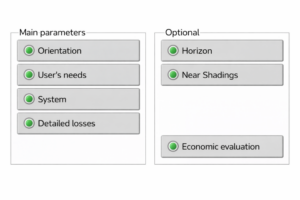
Sometimes, the extended unreliable climatic conditions could lead to more discharge of the battery. So, always having a backup like a generator to recharge the battery is necessary. This again increases the installation cost and the maintenance work.
Considering all the above factors; Standalone systems are best where the use of an inverter is almost negligible. For example, in camper vans, camping tents, etc. A simple PV array recharges the rechargeable battery whenever solar radiation is available. Then the majority of the power is provided by the battery during the unavailability of light.
Overall, we can conclude that standalone systems are slightly more complex than grid-connection systems.In PVsyst, the main parameters required for this system include orientation, user’s needs, system, and detailed losses.
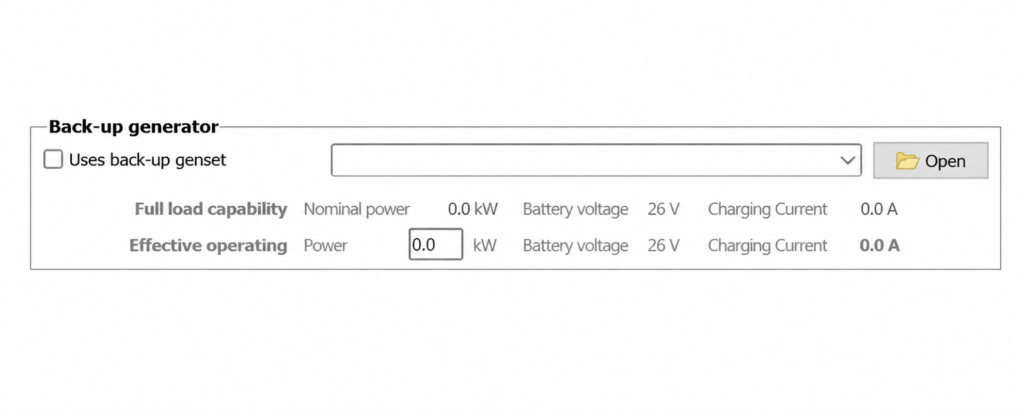
The system parameters include the details of system components i.e., PV module, battery, controller, and backup.
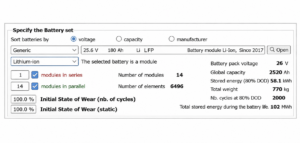
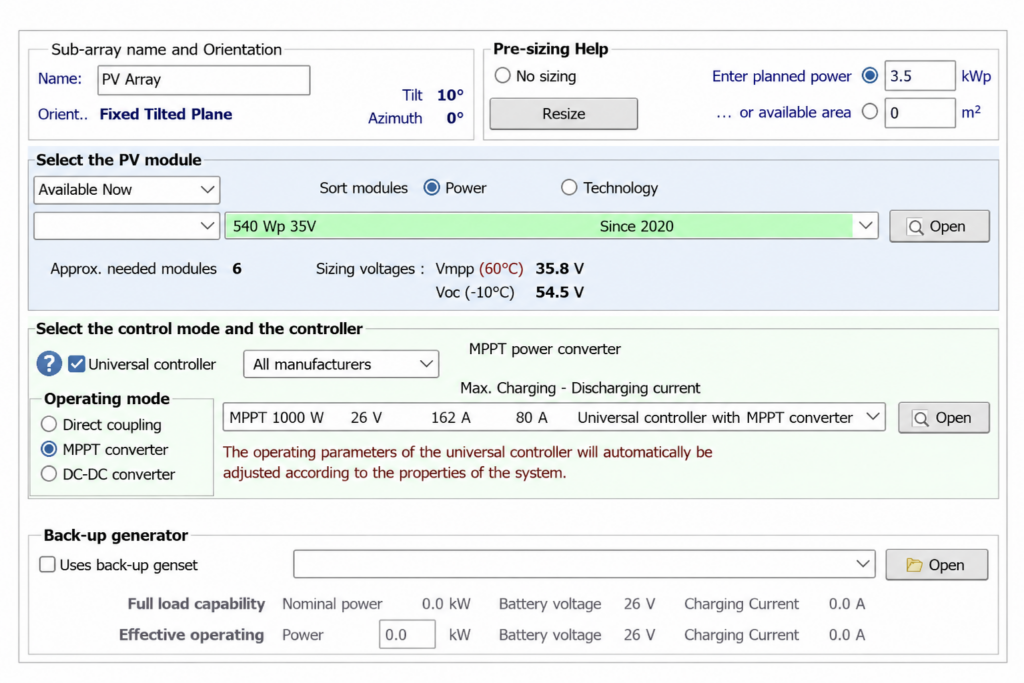
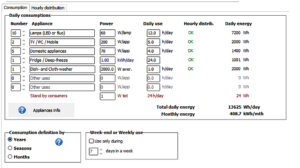
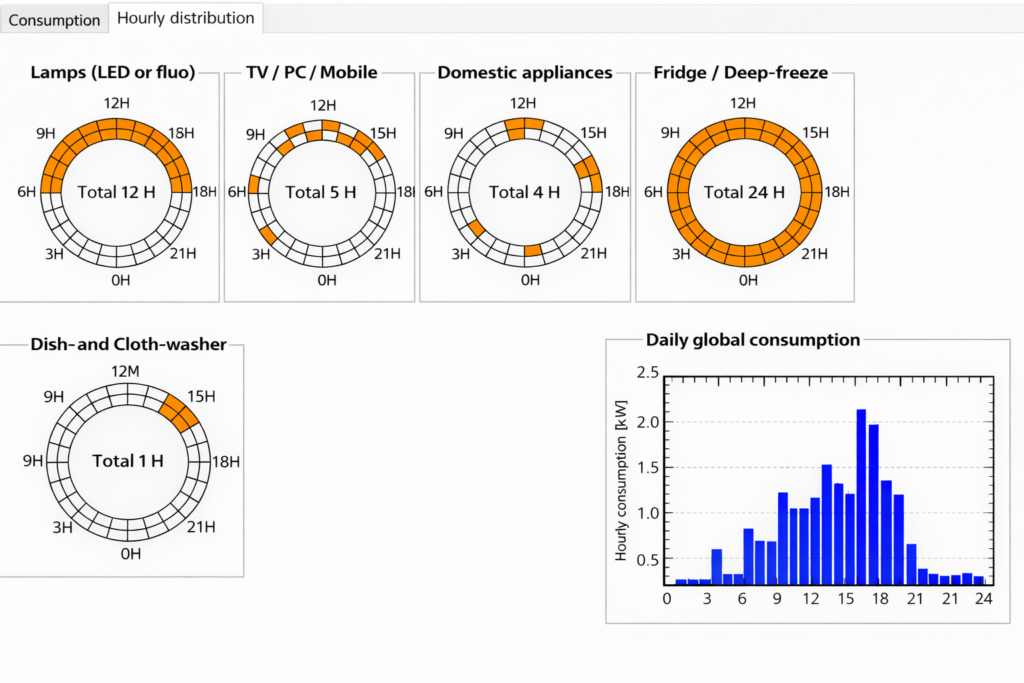
The user’s needs section is the analysis of the daily use of energy in the household. It takes data in two forms, daily consumption and hourly distribution
PUMPING SYSTEMS:
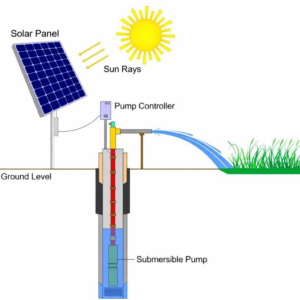
Solar modules power the solar water pump.
It helps to draw surface or groundwater out for irrigation.
The PV array generates energy to run the motor pump set. Afterwards, the pumping system draws water from the open or bore well, stream, pond, etc.,
These systems have a long operating life, are eco-friendly, and are easy to maintain. Installing these systems in open areas increases the risk of panel theft.
The Pumping Systems in PV System Design only concern isolated pumping systems, which work according to the sun’s availability, without electrical storage.
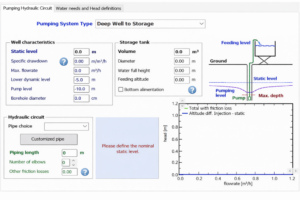
The implementation of such systems involves a detailed definition of the hydraulic circuit (kind of system like a deep well, pumping from a lake
In PVsyst, the main parameters required for this system include orientation and water needs.
In PVsyst, the main parameters required for this system include orientation and water needs.
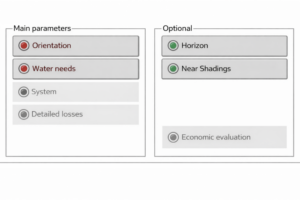
The implementation of such systems involves a detailed definition of the hydraulic circuit (kind of system like a deep well, pumping from a lake or equivalent or pressurization system) as well as the characteristics of the well, pipe, and storage tank.
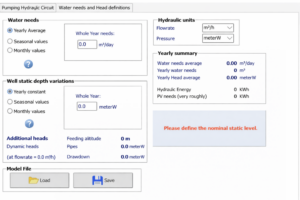
And the other is Water Needs and Heads Definition. This section includes the water needs and well static depth variations on a yearly, monthly and seasonal basis, along with the hydraulic units like flowrate and pressure.
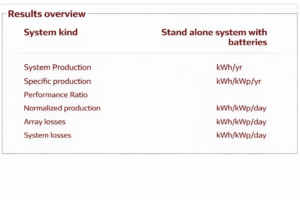
Results overview of Pumping system includes the following parameters.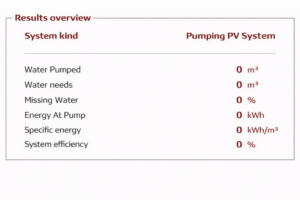
PVsyst doesn’t propose an evaluation of the pumped water, nor any other parameter or result concerning the hydraulic part.
Therefore, a pumping system as defined in PVsyst cannot be associated with any other PV system, even a stand-alone system. It should stay independent of any other power system.