In the previous blog of this series, we explored PV System Design and its different types. Now, let us move on to the next critical aspect that significantly influences a solar plant’s energy yield — PVsyst Orientation.
The orientation and positioning of solar modules—whether in a ground-mounted system or a rooftop installation
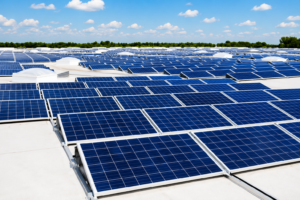
play an important role in maximising the energy yield of a solar power plant.
A solar module’s exposure to sunlight directly influences the amount of energy it can generate. Additionally, factors such as tilt angle, azimuth orientation, shading, and tracking configuration significantly impact overall system performance. Therefore, understanding PVsyst orientation parameters is essential for designing efficient, high-performing, and accurately simulated solar PV systems.
In this blog, we will explore these key orientation parameters, including tilt angle, azimuth angle, solar tracking systems, and orientation optimisation techniques used to maximise solar energy generation and improve simulation accuracy. Without further ado, let’s dive deep into the topic.
As explainedearlier, proper PVsyst orientation and module positioning help maximise sunlight exposure, which improves energy generation, enhances system efficiency, and ensures better long-term performance.
Seasonal Impact on Solar Module Orientation
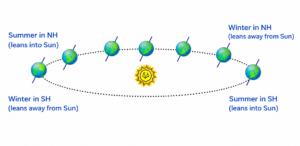
The sun’s position changes throughout the year. Also, during summer in the Northern Hemisphere, the sun appears higher in the sky, while in winter it travels lower across the horizon.
Because sunlight reaches the Earth at a lower angle during winter, designers typically position solar modules at a steeper tilt angle to capture maximum irradiation. In contrast, they generally prefer flatter tilt angles during summer when the sun is higher overhead.
Moreover, optimising module orientation in the seasonal sun movement improves solar energy capture and enhances the PV system’s annual performance.
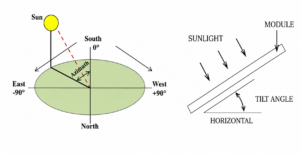
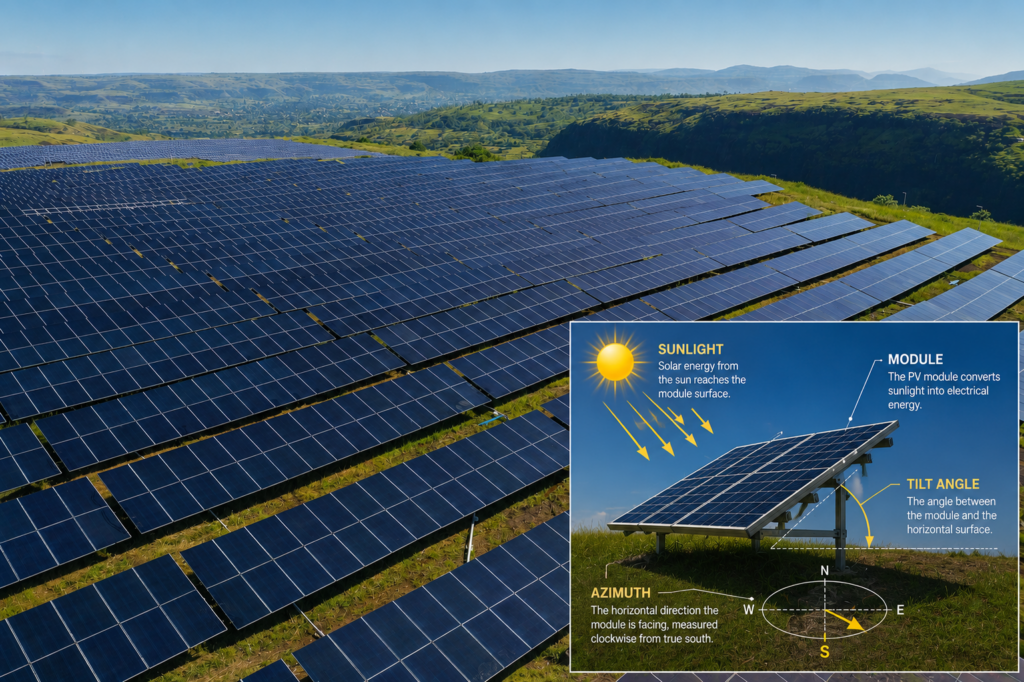
Location-Based Orientation: Tilt and Azimuth in Solar PV Design
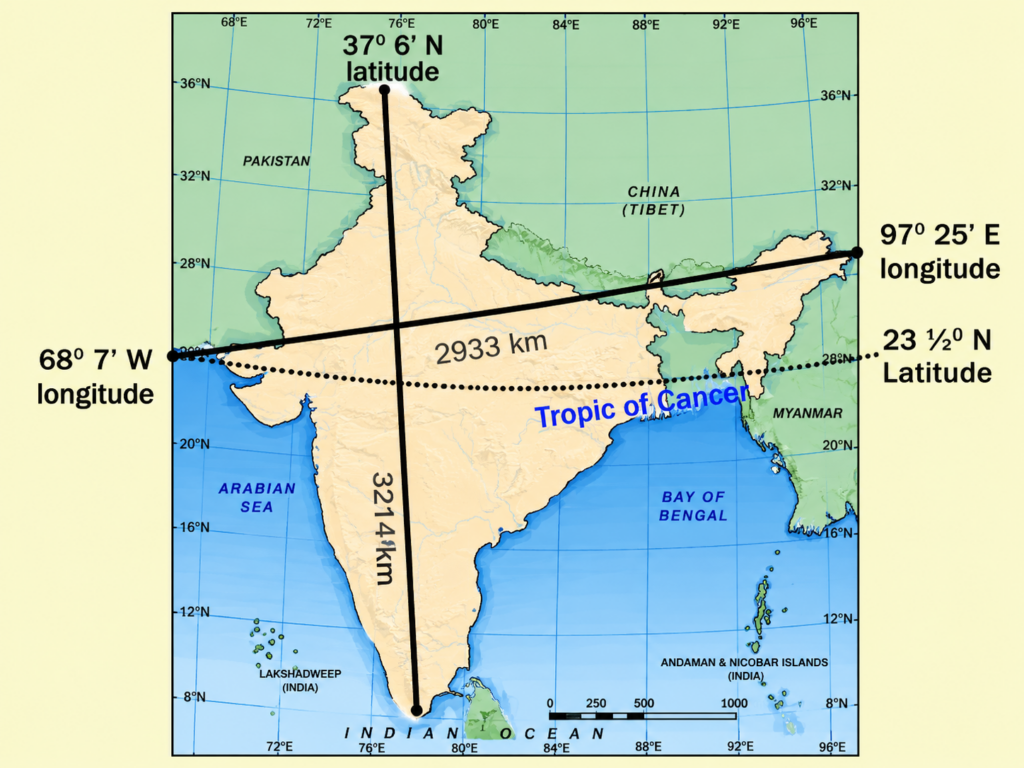
Geographic location is one of the most important factors in determining the optimal orientation of solar modules. Therefore, two critical parameters — tilt and azimuth — come into play.
Generally, as a general rule of thumb in the solar industry, solar panels should:
- Face toward the equator.
- Has to be installed at a tilt angle approximately equal to the latitude of the project location.
Based on this principle:
- Modules in the Northern Hemisphere are generally oriented toward the South.
- Southern Hemisphere Modules are generally oriented toward the North.
Sun Movement and Solar Tracking Systems
The sun’s movement throughout the day significantly influences the positioning and orientation of solar modules. Moreover, to maximise solar irradiation capture, designers can equip PV systems with tracking technologies that follow the sun’s path.
Solar tracking systems continuously adjust the modules’ direction to improve energy generation and overall plant efficiency.
There are two primary types of solar tracking systems:
- Single-Axis Tracking
- Dual-Axis Tracking
These tracking mechanisms help optimise module orientation based on the sun’s movement. Additionally, it enables a higher energy yield than fixed-tilt solar installations.
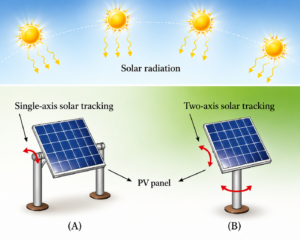
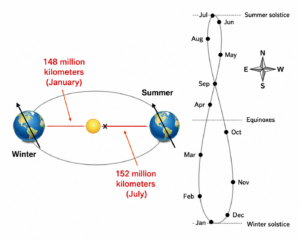
In single-axis solar tracking systems, installers generally position the modules along the North–South (N–S) direction, while the tracker rotates the panels from East to West (E–W) to follow the sun’s daily movement.
As we know, the sun rises in the east and sets in the west approximately every 24 hours. However, this east-to-west movement is not perfectly uniform throughout the year due to the Earth’s axial tilt and elliptical orbit around the sun.
During certain periods of the year, the sun appears to move faster across the sky, While, during others it appears to move more slowly. Single-axis trackers help compensate for this variation by continuously adjusting the panel orientation throughout the day to maximise solar irradiation capture and improve overall energy generation.
To maximise solar energy generation, the ideal approach is to continuously track the sun’s path throughout the day and across different seasons.
While single-axis trackers follow the sun’s daily east-to-west movement, seasonal variations in the sun’s position require additional adjustments in module tilt. This process is called seasonal tracking.
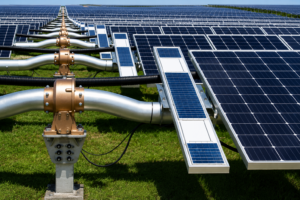
In seasonal tracking, operators tilt solar modules by approximately 5° to 10°, depending on the project’s latitude, usually three to four times a year to maintain optimal sunlight exposure.
This is where dual-axis tracking systems become highly effective. Unlike single-axis systems, dual-axis trackers adjust both:
- The daily east-west movement of the sun
- The seasonal variation in solar altitude
Operators can perform tracking either manually or through automated mechanical systems that use components such as actuators, motors, and gear mechanisms.
By continuously optimising module orientation, dual-axis tracking systems help maximise solar irradiation capture and improve overall plant energy yield. The market for dual axis trackers in India is comparatively very low due to their increased complexity, additional capital cost, operations & maintenance cost, and land requirements.
Comparison Analysis of Solar Tracking Systems
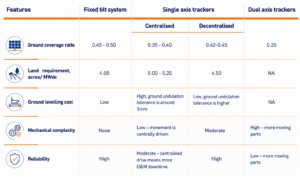 Despite their higher energy generation potential, the adoption of dual-axis solar trackers in India remains relatively limited. This is primarily due to factors such as:
- Increased system complexity
- Higher capital investment
- Additional operations and maintenance requirements
- Greater land utilization
As a result, developers commonly prefer single-axis trackers for large-scale solar projects because they provide a practical balance between higher energy generation and overall project economics.
Performance Comparison
Compared to fixed-tilt solar systems:
- Single-axis tracking systems can improve energy generation by approximately 25% to 35%
- Dual-axis tracking systems can increase energy yield by around 30% to 45% on the same installed capacity.
Moreover, these systems continuously optimise the orientation of solar modules to maximise sunlight exposure throughout the day and across different seasons.
The following comparison analysis provides a clearer understanding of the differences between fixed-tilt, single-axis, and dual-axis solar tracking systems.
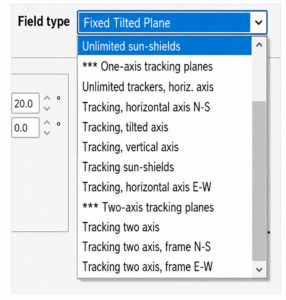
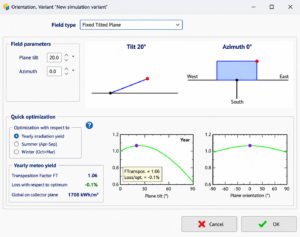 Orientation Settings in PVsyst
PVsyst supports multiple plane orientations to accurately simulate types of solar PV installations and tracking configurations.
So, when the Orientation option is selected in PVsyst, a dialogue box appears to allow the user to define the required orientation parameters for the project location and system design.
This configuration window helps designers select the appropriate orientation mode based on factors such as:
- Site location
- Module tilt angle
- Azimuth angle
- Fixed-tilt or tracking system configuration
Therefore, proper orientation settings in PVsyst are essential for achieving accurate energy yield simulations and realistic plant performance analysis.
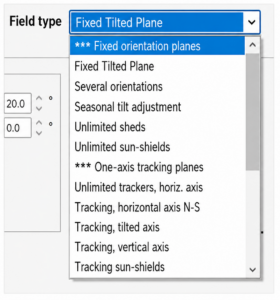
PVsyst offers multiple orientation modes for simulating fixed-tilt, single-axis tracking, and dual-axis tracking solar PV systems. So, for each orientation type, key parameters such as tilt angle and azimuth angle must be defined accurately based on the project location and system configuration. These settings play a crucial role in determining the solar irradiation of the modules and the overall plant’s energy yield.
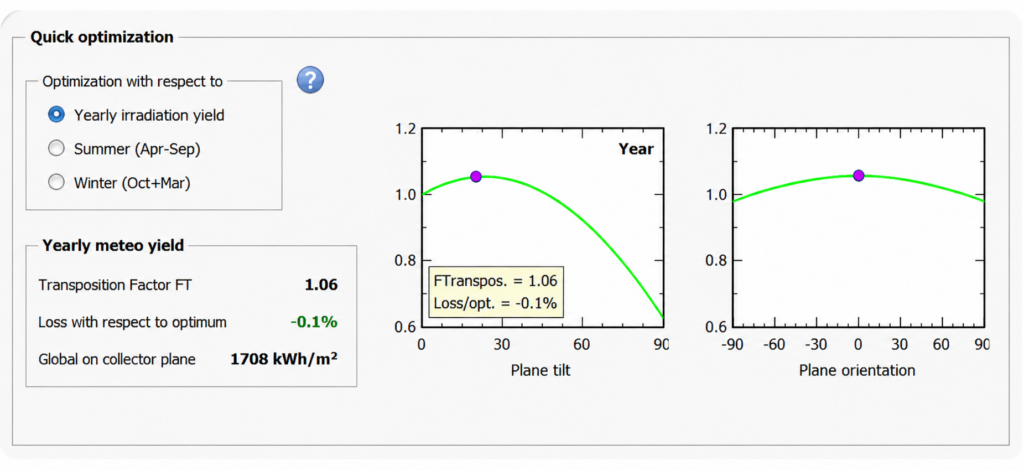
PVsyst provides a quick optimisation feature that helps designers determine the most effective module orientation for maximising solar energy generation. We can optimise on both a yearly and seasonal basis. Also, the software allows users to manually define specific summer and winter months for analysis.